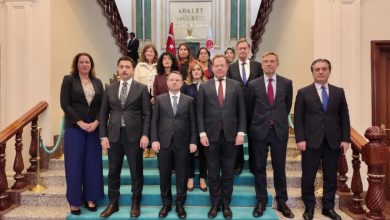
Ukraine Faces Allegations of Denying Services to Turkish Nationals Linked to Gülen Movement
Ukraine does not officially recognize dual citizenship, a long‑standing policy that affects all foreign nationals, including Turks. However, the recent claims suggest that Turkish citizens linked to the Gülen movement may be facing additional, targeted restrictions, beyond the general legal framework.
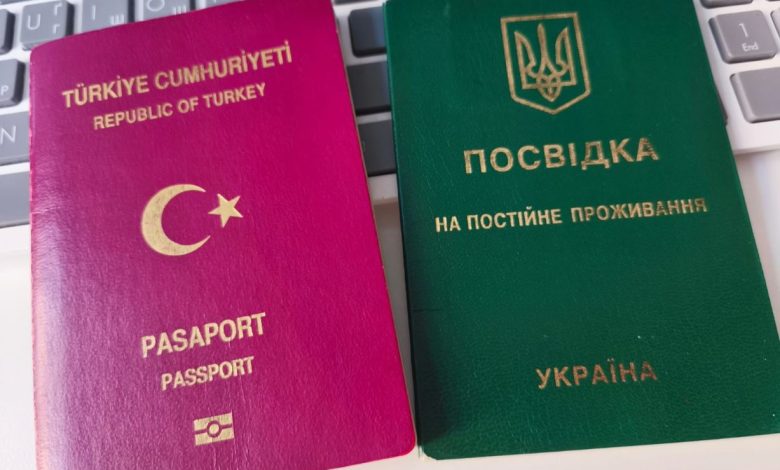
New allegations have emerged claiming that Ukrainian authorities have been refusing administrative services, residency extensions, and financial access to Turkish citizens allegedly associated with the Gülen movement, a group designated as a terrorist organization by Ankara but not by Kyiv or Western governments.
According to testimonies shared by affected individuals and human rights observers, several Turkish nationals residing legally in Ukraine report that their residency permits were not renewed, their bank accounts were frozen, and they were denied routine bureaucratic procedures without formal explanation. These claims raise concerns about whether Ukraine may be informally aligning with Ankara’s long‑standing pressure campaign against followers of the movement.
Allegations of Systematic Obstacles
Individuals interviewed say they encountered a pattern of obstacles across multiple state institutions:
Refusal to process residency renewals: Applicants report being told verbally that their files “cannot be accepted” or that “additional security checks” are required, without written documentation.
Frozen or inaccessible bank accounts: Several Turkish nationals claim that Ukrainian banks suspended their accounts shortly after they attempted to renew residency or update personal information.
Denial of basic administrative services: Some report being unable to obtain tax numbers, register addresses, or complete standard migration procedures.
Lack of official explanation: No public statement has been issued by Ukrainian authorities regarding these allegations.
Human rights advocates argue that the absence of transparency makes it difficult to determine whether these actions stem from political pressure, security cooperation, or internal administrative decisions.
Citizenship Dilemma: Turkish Nationals Unable to Renounce Citizenship
Several Turkish nationals linked by Ankara to the Gülen movement report that they face an additional legal barrier: they are unable to renounce their Turkish citizenship, a prerequisite for naturalization in Ukraine.
According to affected individuals, Turkish consulates have refused to process routine consular services, including applications to renounce citizenship, on the grounds that these individuals are under investigation or considered affiliated with the Gülen movement. As a result, they remain legally tied to Turkey even if they have lived abroad for years.
Because Ukraine requires applicants for naturalization to formally renounce their previous citizenship, those who cannot obtain the necessary documents from Turkish authorities find themselves in a legal dead‑end. This situation effectively prevents them from:
- Renouncing Turkish citizenship, due to non‑processing of applications
- Acquiring Ukrainian citizenship, due to the renunciation requirement
- Regularizing long‑term residence, if their residency extensions are simultaneously being denied
Human rights observers argue that this creates a double‑layered vulnerability.
Ukraine’s Approach to Dual Citizenship
Although Ukraine does not formally recognize dual citizenship, the country’s legal framework contains several narrow exceptions and practical grey zones. Ukrainian law states that a citizen of Ukraine is considered only a Ukrainian citizen in the eyes of the state, even if they hold another passport. However, in practice, Ukraine has tolerated dual citizenship in certain cases, particularly involving:
- Countries with large Ukrainian diasporas, such as Canada and the United States, where many Ukrainian emigrants have acquired second citizenship.
- EU member states, especially Poland, Germany, and Italy, where millions of Ukrainians have lived and worked for years.
- Israel, due to long‑standing migration patterns and the Law of Return.
These situations are not the result of formal bilateral agreements but rather de facto tolerance, as Ukraine has not systematically enforced penalties against citizens who acquire a second nationality in these countries.
By contrast, Ukraine has no dual‑citizenship arrangements or informal tolerance mechanisms with Turkey. As a result, Turkish nationals — including those seeking long‑term residence or naturalization — cannot rely on any special provisions or exceptions.
Possible Political Context
Analysts note that Turkey has repeatedly urged foreign governments to take action against alleged Gülen supporters since the 2016 coup attempt. While Ukraine has not publicly adopted Ankara’s position, the two countries maintain close cooperation in defense, trade, and intelligence matters.
Some experts suggest that Ukraine, currently dependent on international alliances and military partnerships, may be quietly accommodating Turkish security concerns, though no official confirmation supports this interpretation.
Concerns Raised by Rights Groups
International human rights organizations warn that if the allegations are accurate, Ukraine may be violating its obligations under European human rights standards, particularly regarding:
Non‑refoulement protections
Due process rights
Equal access to administrative services
Protection from politically motivated discrimination
Advocates stress that individuals associated with the Gülen movement have faced extradition attempts, renditions, and arbitrary detentions in several countries, making Ukraine’s alleged actions especially concerning.
Ukrainian authorities had begun taking coordinated measures targeting institutions allegedly connected to the Gülen movement. According to the article, Ukrainian security and education bodies were advised to limit cooperation, increase monitoring, and review the legal status of organizations believed to be affiliated with the movement.
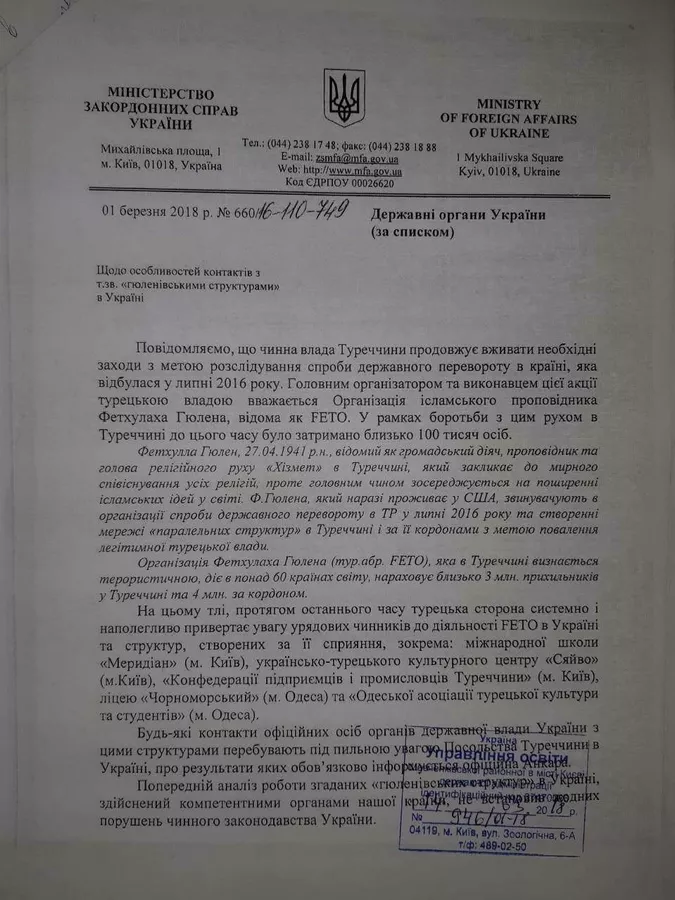
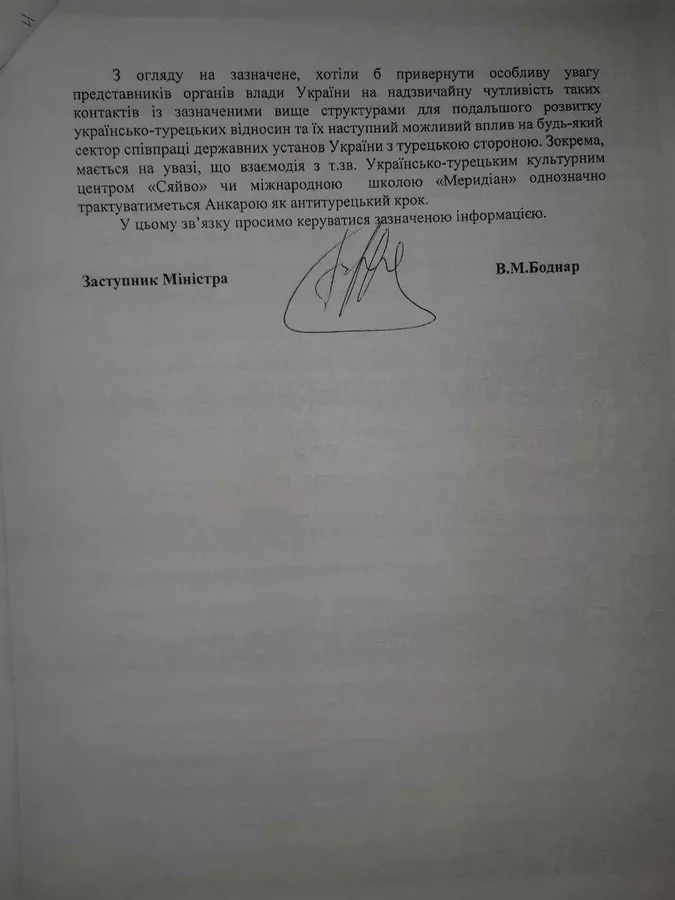
Internal Circular Reportedly Warns Ukrainian Officials Against Engaging with Gülen‑Linked Entities
Local media reports claim that Ukraine’s Ministry of Education and Science circulated an internal directive advising regional education departments to avoid cooperation with institutions allegedly connected to the Gülen movement. According to the report, the circular instructs officials to refrain from signing new agreements, renewing existing partnerships, or participating in joint activities with these organizations.
The document, which was reportedly distributed to provincial education authorities, frames the issue as a matter of “national security” and urges administrators to exercise heightened caution when dealing with foreign-linked educational networks. While the circular does not explicitly name specific schools or associations, it references “organizations affiliated with a foreign religious‑political structure,” a description widely interpreted by observers as pointing to Gülen‑inspired institutions.
Ukrainian authorities have not publicly commented on the authenticity or scope of the directive, and no official statement has been issued to clarify whether the circular reflects a broader policy shift or a localized administrative measure. However, rights groups warn that such internal instructions — if confirmed — could contribute to an environment in which Turkish nationals associated with the movement face increasing administrative pressure.
Calls for Transparency
Legal experts and civil society groups are urging Ukrainian authorities to:
Clarify the legal basis for the reported administrative refusals.
Provide written explanations to affected individuals.
Ensure that financial institutions follow due process.
Guarantee that no foreign political pressure influences domestic procedures.