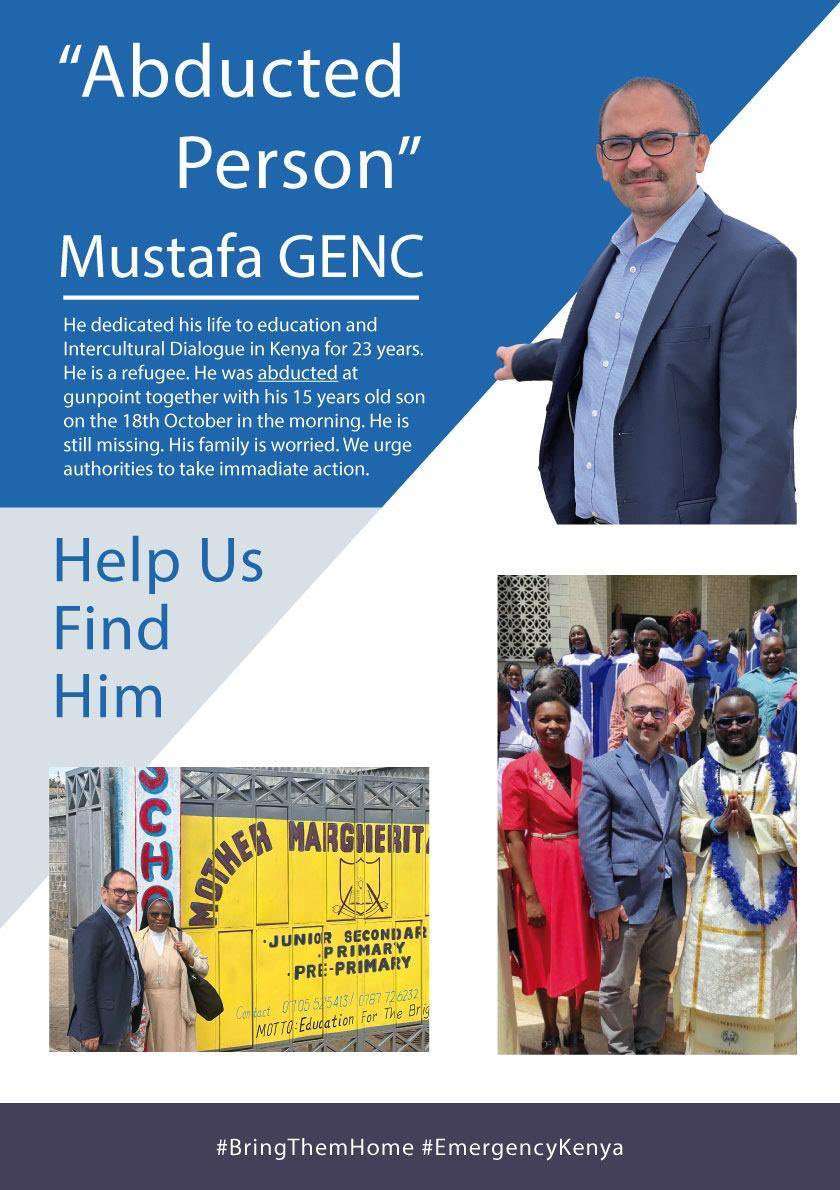
Seven Turkish citizens are feared to have been abducted by Turkey’s National Intelligence Organization (MİT) due to their links to the Gülen movement after they were kidnapped by unknown individuals in Nairobi, Kenya, in the early hours of Friday, the Stockholm Center for Freedom (SCF) website reported.
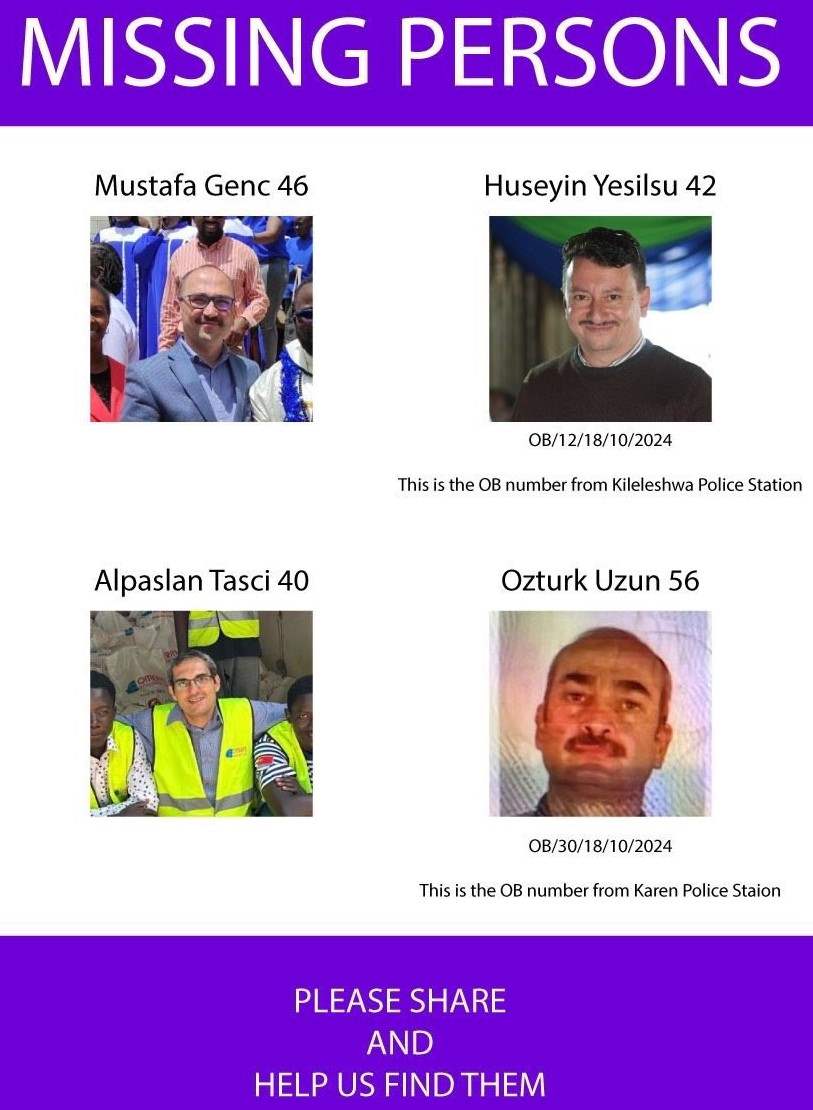
Mustafa Genç, his son Abdullah Genç, Hüseyin Yeşilsu, Necdet Seyitoğlu, Öztürk Uzun, Alparslan Taşçı and his wife Saadet Taşçı were the individuals that were kidnapped. Abdullah Genç, Necdet Seyitoğlu and Saadet Taşçı were later released by the kidnappers. The abductees were reportedly asylum-seekers registered with the Office of the United Nations High Commissioner for Refugees (UNHCR), who were protected from forcible return to Turkey, where they claimed they face threats to their life and freedom due to their links to the faith-based Gülen movement.
The incident led to fears that they were kidnapped by Turkey’s intelligence agency MİT, which has been responsible for employing extra-legal methods, including renditions, to secure the return of Gülen movement supporters after official extradition requests were denied.
Seven Turkish citizens are feared to have been abducted by Turkey’s National Intelligence Organization (MİT) due to their links to the Gülen movement after they were kidnapped by unknown individuals in Nairobi, #Kenya.#EmergencyKenya@hrw@_AfricanUnion@IPOA_KE pic.twitter.com/uqegtyZHnS
— UA24 | NEWS 🇺🇦 (@UA24en) October 19, 2024
UK Citizen Necdet Seyidoğlu Recounts Terrifying Abduction by Alleged MİT-Linked Kidnappers in Kenya
Necdet Seyidoğlu, a UK citizen, who was kidnapped on Friday by individuals allegedly connected to Turkey’s National Intelligence Organization (MİT), recounted his terrifying experience in a video message.
British citizen Necdet Seyidoglu shares his experience after being abducted in Kenya by individuals allegedly linked to Turkish intelligence.
📰https://t.co/WsP8z7cxO0@UKinKenya @StateHouseKenya @ForeignOfficeKE @IPOA_KE @InteriorKE#TransnationalRepression #EmergencyKenya pic.twitter.com/dtXO5gIfnz
— UA24 | NEWS 🇺🇦 (@UA24en) October 19, 2024
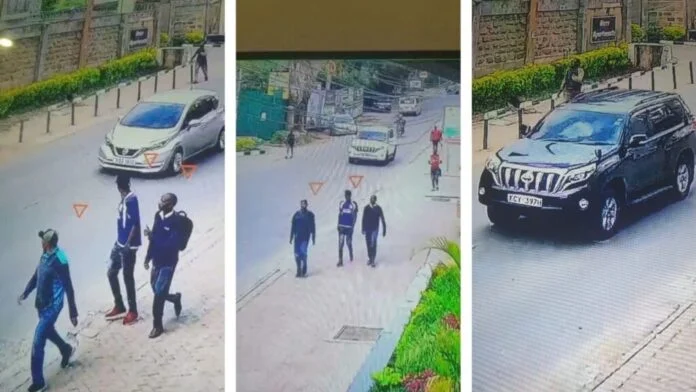
Seyidoğlu said he and a friend were kidnapped by four masked men who blocked their path with a car around 7:30 am while on their way to work. The kidnappers pointed their guns at them and forced them into a vehicle.
He was among seven individuals who were kidnapped by unknown assailants in the Kenyan capital. While three of the victims, including wife of one of the abducted and a minor, were later released, four others remain missing.
“They immediately put sacks over our heads,” he recounted. “They drove around the city for about four hours without getting out of the car.”

Seyidoğlu asked their kidnappers who they were and requested to see their IDs, but received no response. The kidnappers also refused to tell them of their destination.
After an additional two hours, the kidnappers separated their victims and placed them in different cars. “I traveled with them for about three more hours,” he said. “My eyes were still covered and they refused to answer any of my questions.”
Eventually, the kidnappers then told Seyidoğlu they would release him. They confiscated his laptop and left him in a remote part of Nairobi.
UN-protected refugee shares harrowing tale of abduction, urges authorities to locate missing husband
Saadet Taşçı, who was kidnapped on Friday in Nairobi by individuals allegedly connected to Turkey’s National Intelligence Organization (MİT), has recounted her harrowing experience in a video message and urged authorities to locate her husband, who is still missing.
Taşçı said they were abducted from the courtyard of a government office where they had gone to get driver’s licenses. According to her account, four men in ski masks armed with AK47s forced them into a large black SUV.
Taşçı and her husband were among seven people kidnapped by unknown assailants in the Kenyan capital of Nairobi. While three of the victims, including Taşçı herself, a British citizen and a minor, were later released, four others remain missing.
Saadet Taşçı recounts her harrowing experience of being abducted in #Kenya by individuals allegedly connected to Turkish intelligence. She was released after 8 hours in captivity, but her husband is still missing.#EmergencyKenya@ForeignOfficeKE @Saadet_Kenya@ForeignOfficeKE pic.twitter.com/phq66iZK32
— UA24 | NEWS 🇺🇦 (@UA24en) October 20, 2024
“As soon as we were in the car, they blindfolded us and handcuffed my husband,” Taşçı said. “They then removed our shoes and took our phones and accessories like watches and jewelry.”
After driving for about an hour, the kidnappers then separated the couple and put them in different vehicles.
According to Taşçı, the kidnappers then drove her around town for about six-and-a-half hours while she was blindfolded. “During this time they didn’t allow me to talk, eat anything, etc.,” she added.
The couple had been granted protection by the United Nations in 2018 and issued refugee IDs. They were also issued travel documents at the beginning of 2024. “We had no doubt that the Kenyan government and the UN would protect us,” Taşçı said. “We were living here comfortable in that knowledge.”
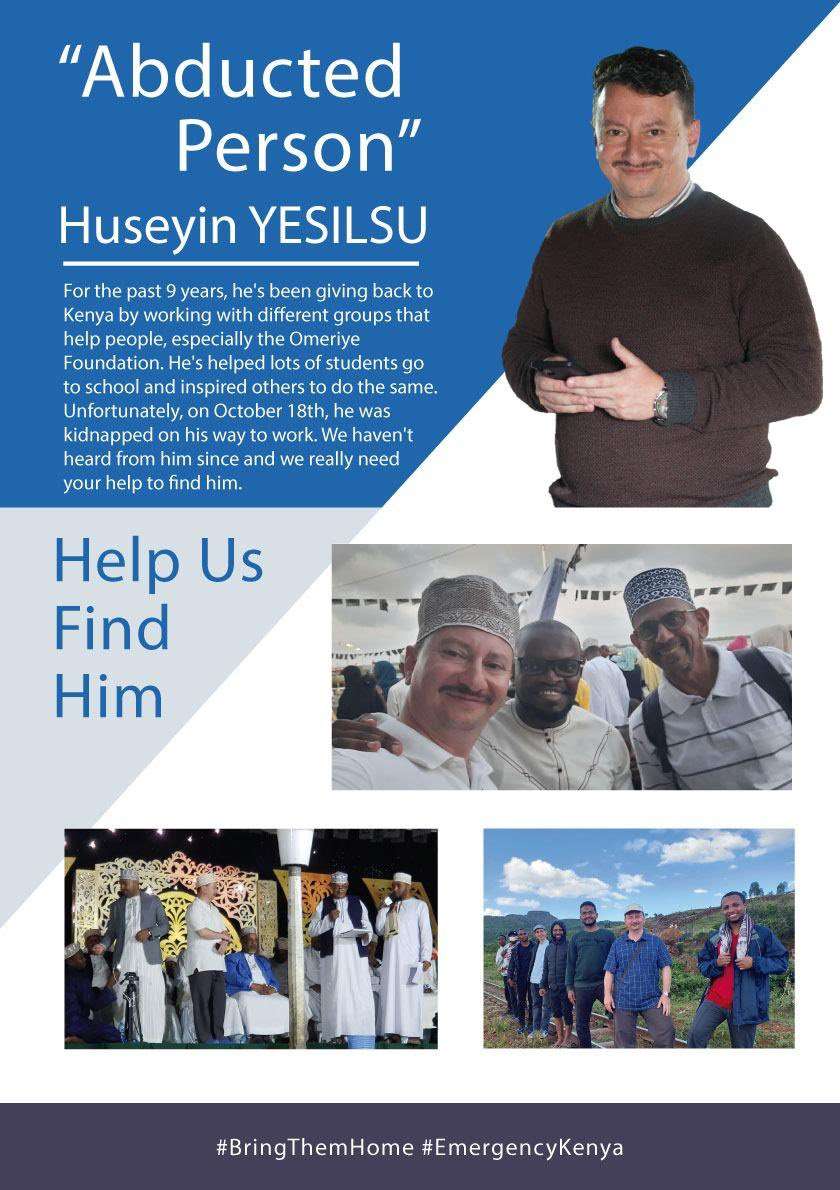
She appealed to the Kenyan government and the United Nations to ensure the safe return of her husband and others that were abducted the same day. “The people who were kidnapped have done great services to Kenya,” Taşçı added. “Especially through their involvement in aid efforts.”
The incident has raised concerns that the kidnappers were operating under the direction of the Turkish intelligence agency MİT, which is known to employ extralegal methods, including renditions, to secure the return of Gülen movement supporters abroad.
Turkish President Recep Tayyip Erdoğan has been targeting followers of the Gülen movement, inspired by US-based Turkish Muslim cleric Fethullah Gülen, since the corruption investigations of December 17-25, 2013, which implicated then-prime minister Erdoğan, his family, and his inner circle.
Dismissing the investigations as a Gülenist coup and conspiracy against his government, Erdoğan designated the movement as a terrorist organization and began to target its members. He intensified the crackdown on the movement following an abortive putsch on July 15, 2016 that he accused Gülen of masterminding. Gülen and the movement strongly deny involvement in the coup attempt or any terrorist activity.
Since the coup attempt MİT conducted operations for the forcible return of more than 100 people with alleged links to the Gülen movement. The latest cases include Koray Vural, a Turkish businessman who went missing in Tajikistan in September 2023 and was found to be in police custody in Turkey the next month. Emsal Koç, who also went missing Tajikistan in June 2023, was found to be in police custody in the eastern Turkish province of Erzurum when the police contacted his family living in the province.
According to a 2023 report by Freedom House on transnational repression, Turkey has become the world’s second most prolific perpetrator of transnational repression. A wide range of tactics used by the Turkish government against its critics abroad include spying through diplomatic missions and pro-government diaspora organizations, denial of consular services and outright intimidation and illegal renditions.
Erdogan’s Wrath Stretches To Ukraine, Leaving Turks In Fear Of Kyiv-Assisted ‘Kidnapping’
Since the Turkish president’s campaign reached Ukraine in July, Turkish dissidents living there have lived in fear of becoming the next one to be snatched and returned to Turkey, several of them told RFE/RL in recent interviews. The dissidents, some of whom have lived in Ukraine for more than a decade and, like Erdogdu, have work permits and residency documents, asked for anonymity for fear of becoming targets.
The first known deportation of a Gulen supporter from Ukraine happened on July 11, when Turkish entrepreneur Salih Zeki Yigit was nabbed by Ukrainian Security Service (SBU) agents in broad daylight on a busy street in Odesa. Erdogdu, citing his own Turkish sources, claimed the SBU transferred Yigit to the neighboring Kherson region, where he was put on a private plane and flown overnight to Istanbul with a sack over his head.
In a second case, on July 12, local police and SBU agents detained Turkish journalist Yusuf Inan near his family’s home in the southern Mykolaiv Oblast.
Inan’s Ukrainian wife, Kateryna, told RFE/RL that her husband summoned her to translate for him when three police officers and three masked men who identified themselves as SBU agents came to the family’s property on July 12. They told her Inan was wanted in his Turkish hometown, Izmir.
Kateryna said the SBU agents then grabbed Inan, hit him over the head, and “shoved him into the car like a dog.” She said he was taken to a pretrial detention center in the city.
The next day, a local court quickly ruled in favor of extradition and Inan was flown almost immediately to Turkey. Kateryna only found out when she saw a photo of Inan published on a Turkish news site that showed him standing beside a Turkish flag with his hands zip-tied.
Both cases appear to have been carried out in contravention of the five-day appeal period prescribed by Ukrainian law.
The SBU and the Ukrainian Justice Ministry both declined to comment on the cases.